
Last updated: May 2026
What Conference Production Actually Means for Corporate Events
A 600-attendee corporate conference looks like one event on the run-of-show. In production, it’s five. There’s a general session with keynote, live camera capture, and IMAG. There are three concurrent breakouts in separate rooms. There’s a registration desk processing 200 badges per hour. There’s a hybrid stream feeding 200 remote attendees. And there’s a reception that night with its own audio rig and lighting state.
Most planners hit this complexity gap on their first multi-day conference. Corporate event production guides treat conferences as a scaled-up version of a single-room event. They aren’t. Conference production is a distinct discipline with its own operational layers, staffing requirements, and technical risk profile.
This guide breaks conference production into the five layers your AV partner has to coordinate, gives you a scoping framework for evaluating production partners, and shares real cost ranges by conference size. If you’re planning a 200- to 2,000-attendee corporate conference and trying to figure out whether your current AV scope matches the operational load, start here.
What Conference Production Covers (and What It Doesn’t)
Conference production is the technical and creative coordination of audio, video, lighting, staging, rigging, and live streaming across every component of a multi-session event. That covers your general session, your breakouts, your registration and lobby experience, your hybrid stream, and your evening events. It is distinct from event planning, which handles logistics, registration, program design, and attendee experience.
The two roles overlap heavily during planning. They diverge sharply on show day. Your planner runs the program. Your production team runs the technical execution that makes the program possible.
Here’s where most planners get stuck. They hire production after the program is set, sometimes after the venue is booked. By then, key decisions are locked in that affect production cost and feasibility. Ceiling height, rigging points, power availability, network bandwidth, and load-in logistics all get decided at venue selection, and all of them shape what’s actually possible on stage.
The better sequence is to bring a production partner into the conversation at venue selection or earlier. We’ve seen Nashville-area conferences where late-stage venue changes added $40,000 to a production budget because the original room couldn’t carry the rigging load. That’s not a production problem. That’s a planning sequence problem.
Conference Production vs. Corporate Event Production
Conference production is a sub-discipline of corporate event production. Both deliver live event technical execution. They aren’t the same job.
A single-room corporate event, like a product launch, a leadership offsite, or an award gala, runs as one production. One stage. One AV stack. One run-of-show. The crew shows up at 6 AM, sets one room, runs one show, strikes by midnight. Complexity scales with the size and creative ambition of that single room.
A corporate conference runs as three to eight productions simultaneously across one to three days. Each room has its own AV stack, its own A1 (audio engineer), its own A2 (audio assistant), its own video and lighting needs, and its own run-of-show. The general session crew is one team. Each breakout room is a separate team. Hybrid streaming is a third team. Evening events are a fourth.
That difference shows up in crew depth, not gear. Any production company can rent more LED panels. Not every production company can put a qualified A1 in five rooms simultaneously and a stage manager calling cues across all of them.
If you’re planning a single-room corporate event, our corporate event management guide covers the broader planning framework. The conference production decisions below sit on top of that foundation.
The discipline distinction matters when you’re scoping partners. A vendor experienced with single-room events at any scale isn’t automatically equipped to run a five-room conference. Ask specifically about multi-room concurrent production experience before signing.
The 5 Layers of Conference Production
Conference production splits into five operational layers. Each has its own AV requirements, crew structure, and budget weight. Most planners think about the first one and under-scope the other four.
1. General Session (Plenary, Keynote, Opening, Closing)
The main stage. Where executives speak, where awards are announced, where the conference brand lives in the camera frame. General session production typically includes a large LED wall (2.6 to 3.9mm pixel pitch for camera-capture quality), multi-camera capture (3 to 5 cameras minimum for a 600-plus room), IMAG screens at the sides for back-of-room visibility, a full audio rig with wireless lavs and handhelds, lighting designed for camera capture (4,400K to 5,600K color temperature, around 100 to 115 foot-candles on stage), and a recorded master that doubles as the post-event highlight reel.
2. Breakout Rooms
Smaller sessions with topical content, panels, or workshops. Three to eight concurrent rooms is typical for a mid-size corporate conference. Each room needs its own AV stack: projector or LED panel, screen, podium mic, wireless lav, A2 to run audio and switching, and basic lighting for speaker visibility. Some breakouts now include in-room recording for content libraries.
Planners under-budget breakouts because they assume “less important equals less complex.” That’s wrong. Five concurrent breakouts running for six hours is 30 hours of live AV happening in parallel. One A2 short and a session loses its audio recording. That’s the layer where mid-tier productions quietly fail.
3. Registration and Lobby Experience
Often overlooked. This layer covers the AV that runs before attendees walk into the general session. Digital signage with rotating sponsor logos and wayfinding. Lobby audio for background music and announcements. Self-service registration kiosks. Photo activation moments. ADA accessibility components (induction loops, captioning displays where required). The first impression of the conference happens here, and the gear list is real.
4. Hybrid Streaming
Streaming the general session, and sometimes the breakouts, to remote attendees. This is its own production. Broadcast-grade encoding, redundant uplinks, a remote producer monitoring the stream, integration with the virtual platform (Hopin, Zoom Events, vFairs, or proprietary), and a separate run-of-show that accounts for remote Q&A timing. For more on the hybrid-specific production layer, see our hybrid event production guide.
5. Evening Events
Receptions, dinners, awards parties. A separate audio rig, separate lighting state, often a different room or venue entirely. Sometimes a DJ rig, sometimes a band. The evening crew is typically pulled from the same pool as the day crew, but it’s a different load-in and a different show.
General Session vs. Breakout Room AV Requirements
| Component | General Session | Breakout Room |
|---|---|---|
| Display | 6′-12′ wide LED wall, 2.6-3.9mm pitch | 100″-150″ projection or 110″ LED panel |
| Audio | Full FOH PA, 8-16 wireless channels | Compact PA, 2-4 wireless channels |
| Cameras | 3-5 cameras, switched, IMAG | 1 camera optional, recording-only |
| Lighting | Camera-grade key/fill/back, ~110 fc on stage | Speaker-visibility lighting, ~50 fc |
| Crew per room | A1, V1, L1, stage manager, 2 stagehands | A2, optional V2 |
| Run-of-show | Cued, called live by stage manager | Speaker-driven, A2-monitored |
| Recording | Master capture, multi-track audio | Session recording, single mic feed |
The takeaway is that budget weight sits on the general session, but operational risk spreads across all five layers. A conference where the keynote went perfectly but three breakouts had audio dropouts is still a failed production from the attendee survey’s perspective.
How to Scope a Conference Production Partner
Five-factor framework for evaluating production partners on a conference RFP. We use this when we’re scoping our own work, and it’s what we’d want a planner to ask us if the roles were reversed.
1. Concurrent multi-room capacity. Can they staff five concurrent rooms with qualified A1 and A2 talent for the duration of your conference? Ask for the names of three multi-room conferences they ran in the last 12 months. If they pivot to single-room events at any scale, that’s the answer.
2. Hybrid capability that goes beyond “camera in the back.” Real hybrid streaming requires a dedicated stream engineer, broadcast-grade encoding, redundant uplinks, and integration with the virtual platform. Confirm they own (not rent) their core hybrid stack, or have a long-standing partnership with a broadcast partner.
3. Show-calling depth. Who’s the stage manager? Who’s the technical director? On a conference with concurrent sessions, you need a stage manager calling the general session and a tech director coordinating across rooms. One person can’t do both.
4. Day-of crew depth. Get the named crew list before you sign, not after. Five concurrent breakouts requires at minimum 5 A2s, 1 to 2 video techs, 1 lighting tech for the general session, plus stagehands. If the proposal lists “additional crew TBD,” push back.
5. Technical contingency. Backup PA, backup wireless mics, redundant network, spare projector bulbs, spare cables. Ask what happens if the LED wall driver fails during the keynote. The right answer is “we have a spare driver on-site and our V1 can swap it in under 4 minutes.” The wrong answer is “we’d call our supplier.”
The test that catches most under-resourced bids: ask the partner to walk you through their crew assignment for your specific run-of-show, room by room, hour by hour. Vague answers signal under-staffing. Specific answers signal a partner who’s actually run this configuration before.
Conference Production Costs by Event Size
Real cost ranges for corporate conference production, based on Nashville and southeast US market pricing in 2026. These are production-only figures (AV, staging, lighting, rigging, crew labor, hybrid). They do not include venue, catering, F&B, registration platforms, or speaker fees.
| Conference Size | Format | Production Cost Range (US) | Hybrid Adder |
|---|---|---|---|
| 100-300 attendees | GS + 2-3 breakouts, 1-2 days | $25K-$60K | +25-30% |
| 300-700 attendees | GS + 3-5 breakouts + light hybrid, 2 days | $60K-$150K | +30-35% |
| 700-2,000 attendees | Full GS + 5-8 breakouts + full hybrid + evening events, 2-3 days | $150K-$500K+ | +35-40% |
Three things drive the range within each tier:
Stage design and scenic. A 16-foot LED wall is the floor. A full scenic build with custom set pieces, branded scenic, and architectural lighting moves the budget up fast. The same conference can run $80K or $180K depending on this single decision.
Breakout count and recording requirements. Each breakout room adds $4,000 to $8,000 per day for basic AV. Add in-room recording and a per-room A2, and that climbs to $6,000 to $12,000 per room per day.
Hybrid scope. Streaming the keynote only is cheaper than streaming all sessions. Most clients we work with end up streaming the general session and recording breakouts for on-demand playback. That balance keeps hybrid costs in the 25 to 35 percent range above the base production budget.
The cheapest line item is rarely the cheapest outcome. Skimping on A2 coverage across breakouts is where mid-tier conference productions go wrong. We see it three or four times a year.
When You Need a Full-Service Production Partner
A full-service partner is the right call when any of these apply:
- Two or more concurrent rooms. Coordinating audio, video, and show-call across multiple rooms simultaneously requires unified production leadership. Piecing it together from multiple vendors creates coordination gaps that surface on show day.
- Hybrid streaming required. Broadcast-grade hybrid is its own discipline. A general AV vendor running camera-in-back streaming is not a substitute for a real broadcast workflow.
- Executive speakers or high-stakes content. When the CEO is on stage, there’s no tolerance for AV failure. Full-service partners run redundancy at every layer.
- First-time conference at your organization. A new conference has too many unknowns to coordinate across multiple vendors. One accountable partner reduces risk.
Piecemeal vendors can work when you have an experienced in-house production lead, a single-room format, and no executive speakers. For everything else, a full-service production partner absorbs the operational complexity so your planning team can focus on program and attendee experience.
If your conference includes a trade-show exhibit floor, our tradeshow production guide covers the booth and exhibit production layer specifically. For Nashville-area conferences, our AV rental Nashville page covers the local gear inventory and crew base. Most multi-day corporate conferences also include LED video walls, and the specs and sizing decisions live in our LED video wall rental guide.
Frequently Asked Questions
How early should I bring in a conference production partner?
At venue selection, or earlier. Venue decisions including ceiling height, rigging points, power, and bandwidth lock in production constraints that are hard to undo. Most conferences benefit from production input 4 to 6 months out for mid-size events and 6 to 12 months out for events of 700-plus attendees.
What’s the difference between conference production and event planning?
Event planning covers program, registration, logistics, attendee experience, and overall coordination. Conference production covers the technical execution: audio, video, lighting, staging, rigging, and streaming. Planners run the program. Producers run the technical show that makes the program possible. The two roles work in parallel from initial venue selection through strike.
Do I need a hybrid streaming partner separate from my AV partner?
Usually not, if your AV partner has dedicated broadcast capability. The advantage of a single partner is unified coordination between on-site production and the stream. The risk of two partners is handoff gaps between the in-room AV signal and the broadcast workflow. Ask any prospective AV partner whether they run hybrid in-house or subcontract it.
How much does conference production cost in 2026?
Mid-size corporate conferences (300 to 700 attendees, 2 days, with light hybrid) typically run $60,000 to $150,000 for production only. Smaller conferences (100 to 300 attendees, 1 to 2 days) run $25,000 to $60,000. Large conferences (700-plus attendees with full hybrid) start at $150,000 and scale to $500,000 or more depending on scenic design, breakout count, and hybrid scope.
A successful corporate conference looks like one event from the audience seat. From production, it’s five operational layers running in parallel. The planners who know this scope production accurately, build in the right crew depth, and bring their production partner into the conversation at venue selection.
If you’re 4 to 12 months out from a corporate conference and trying to figure out whether your AV scope matches the operational reality, get a scoping conversation on the calendar before you sign with a venue. Elite Multimedia builds custom conference production scopes against your run-of-show, room by room, with full crew assignments and hybrid integration if needed. Request a conference production scope quote and we’ll walk through your specific event in 30 minutes.
About the Author
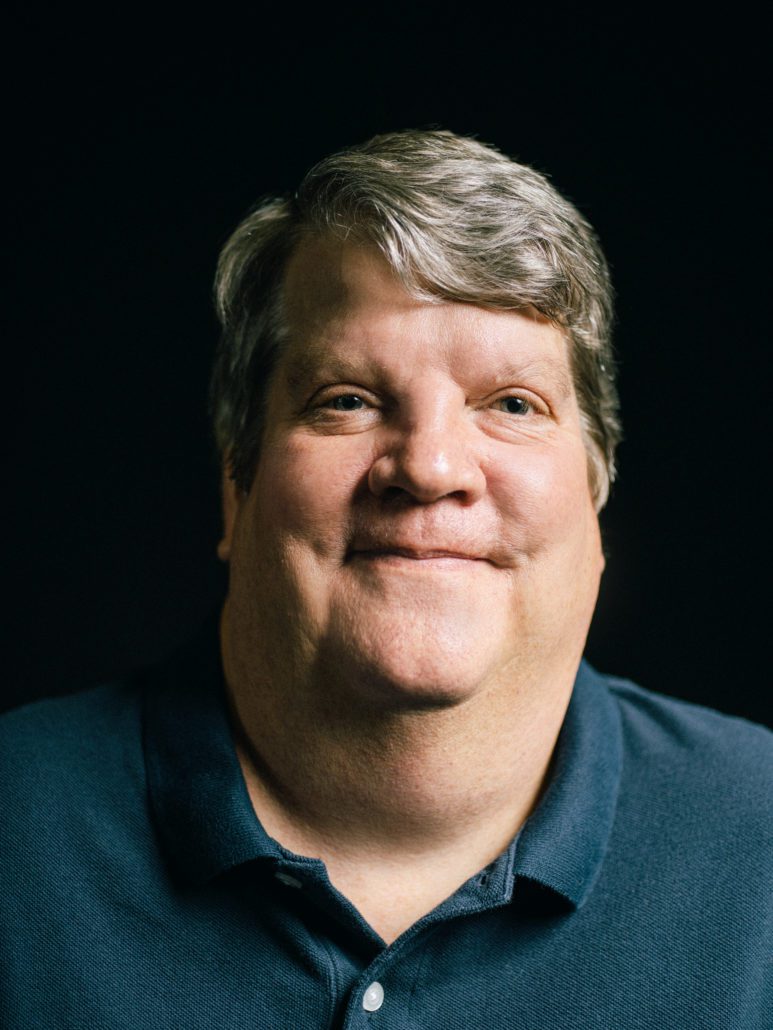
Tom Wilson, VP of Event Production, Elite Multimedia
Tom Wilson is the Vice President of Event Production at Elite Multimedia and a day one employee of the company. He has spent more than 35 years in live music, primarily as an audio engineer and as a production and road manager, with extensive country work that includes Luke Bryan and Gary Allan.
Elite Multimedia is a Nashville-based corporate event production company and has been producing multi-day conferences for Fortune 500 companies and major associations since 2009. Past conference productions include large-scale general sessions, multi-room breakout programs, and broadcast-grade hybrid streaming for healthcare, technology, and financial services clients.