Trusted by global brands and leading production companies for nearly 20 years
What trade show production actually covers
Trade show production is the audio, video, lighting, and crew that turn a booth into something people stop walking for. LED walls, booth lighting design, sound, content playback, and technicians who stay through show hours. What it does not include is the booth structure itself. Your exhibit house builds and ships that.
Most exhibit programs come apart in the gap between those two things. It’s 9pm the night before the hall opens, your exhibit house is done for the day, and the panel that won’t sync has just become your problem. We take that problem off your desk before it starts.
What we handle, and what your exhibit house handles
Your exhibit house sells you the structure. We make it do something.
Fabrication, carpet, furniture, and graphics panels stay with your exhibit house. We plan around their drawings and we talk to them directly, so you’re not in the middle of that conversation.
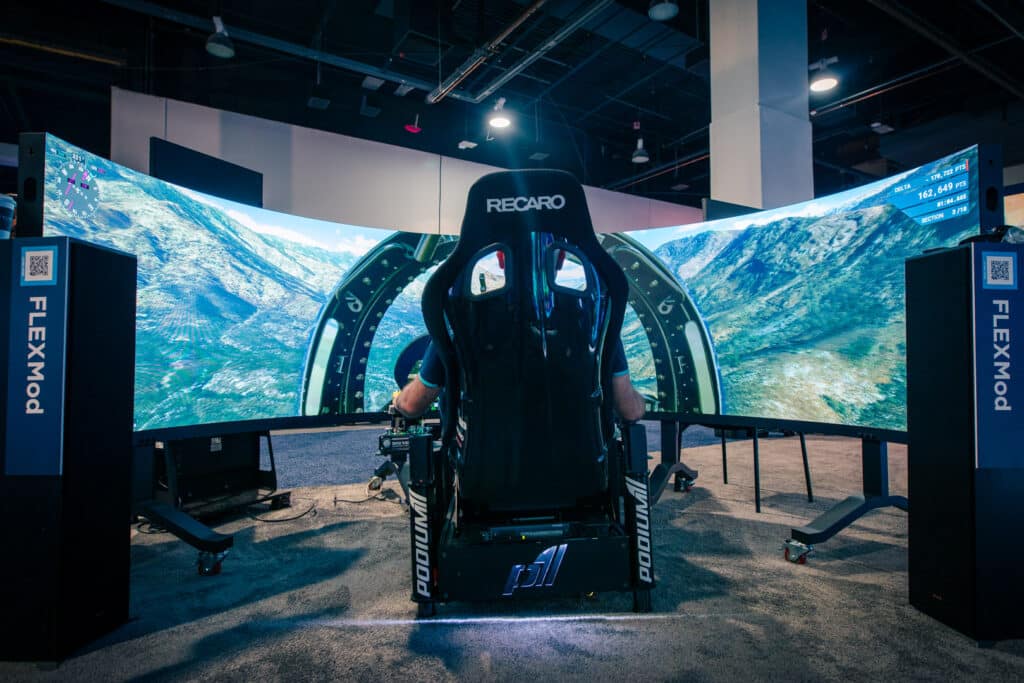
LED video walls
Backdrop walls, header banners, and column wraps spec'd to your footprint and to exhibit-hall viewing distance, so the image holds up to press cameras as well as it does to the eye.
Booth lighting design
Trade show booth design lives or dies on light. We light the product, the graphics, and the people standing in front of both, so your booth reads as intentional from three aisles away.
Audio systems
Sound that carries inside your footprint without bleeding into the neighbors and drawing a complaint from show management. Presentation audio, demo stations, and wireless for stage moments.
Content playback and signal
The playback, switching, and signal path that keeps your content running for every hour the hall is open. Redundant sources, so one failure is not a dark wall.
On-site technicians
A named tech on the floor through install, show hours, and dismantle. Not a setup crew that hands you a remote and heads to the airport.
Sizing and budget: what your booth can actually support
The most common way a trade show quote goes wrong is a wall spec’d for a footprint that cannot carry it. Booth size and viewing distance decide the answer, and both are known long before you need a number.
Booth footprint
What it supports
Worth knowing
10×10 inline
Monitors or a small panel array
A flown wall is not an option in this footprint
20×20 island
An 8×5 to 10×6 backdrop
Leaves room for one meeting area
30×30 and larger island
A 16×9 to 20×12 anchor wall
Still room for meetings and product display
At the 10 to 30 feet people actually stand at in an exhibit hall, a 2.9mm or 3.9mm pixel pitch is crisp. Going finer triples the panel cost and nobody on the floor can tell.
The other half of the number is the building. Major convention centers run under union jurisdiction for electrical, rigging, and equipment movement, so a show in Chicago is quoted at Chicago rates rather than ours. Freight is real money on a full production package. We put both in the quote at the start, because a change order in week eleven is a conversation you should never have to have with procurement.
We work from your exhibit house drawings to build the technical plan: wall size, rigging or ground support, power, signal, and a labor call sized to the building. You approve it before anything ships.
Install
Our crew is in the hall on your install date, coordinating with the exhibit house and with show management. The wall is up, mapped, and running content before you walk the booth.
Show hours
A technician stays on the floor every hour the hall is open. Content changes, a dead panel, a demo station that stops passing audio: handled while your team keeps talking to prospects.
Dismantle and strike
We strike on the schedule show management gives us, coordinate the outbound freight, and get our gear out of your exhibit house's way. You fly home.
On a trade show floor, the size of your production company matters less than whether the person who planned your booth is the person standing in it. With a national firm you get a regional office and a rotating crew. With us you get a named team that was in the design call and is on the floor at install.
We’re based outside Nashville and we produce nationally, which means we’ve run union halls in Chicago and Las Vegas and Orlando. It also means clients from Nashville to Charlotte get a partner who can sit in the room during planning instead of dialing in.
Nearly two decades producing corporate and exhibit programs
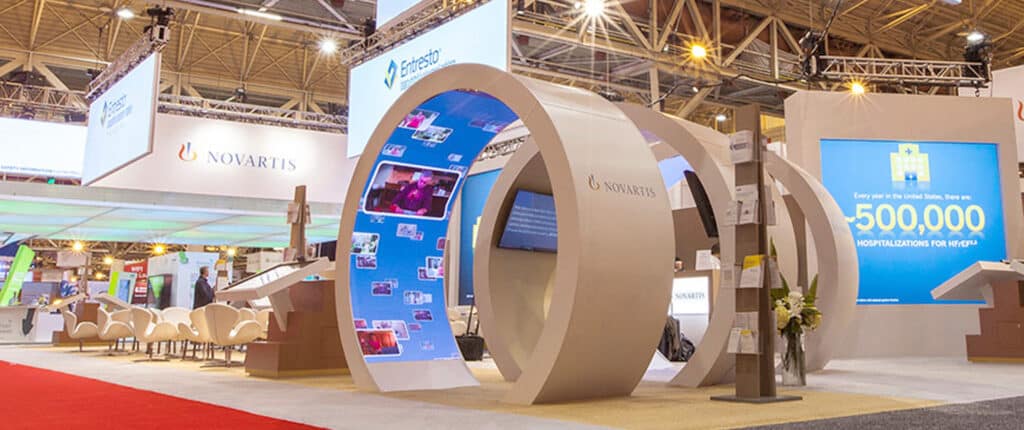
Fortune 500 exhibit clients including Novartis, BuzzFeed, and HINO
PixelFLEX LED pedigree behind every wall we spec
Exhibit programs we've produced
If you’re gathering trade show booth ideas for an upcoming program, this is the work worth looking at first.
HINO Trucks, XL8 reveal
CHALLENGE
HINO was entering the Class 8 market in the US for the first time and needed the reveal to happen on a trade show floor, where the trucks had to
stay completely hidden for two days of open hall before anyone saw them.
SOLUTION
We built a 360-degree ground-level enclosure from 288 PixelFLEX FLEXlite Plus 3.9mm LED panels, ran content on it for the first two days of the
show, and rigged it to twelve Kinesys one-ton motors so the whole enclosure could lift on a single cue.
RESULT
The trucks stayed concealed through two days at the 2018 Work Truck Show in Indianapolis. On day three the enclosure lifted in front of more than
Elite produced the Novartis exhibit at the American Heart Association scientific sessions, a medical conference where the technical bar is set by physician audiences and the exhibit is a working environment rather than a display.
BuzzFeed exhibit
Elite produced the BuzzFeed exhibit, a brand whose audience expects the physical activation to look like the content it publishes.
Visit Charlotte
Elite produced exhibit work for Visit Charlotte, a destination marketing program where the booth is doing the same joba campaign does.
Tom has led Elite’s live production teams through exhibit programs at McCormick Place, the Las Vegas Convention Center, and regional halls across the Southeast.
Related capabilities
Corporate event production
Keynotes, summits, and conventions produced end to end.
What does tradeshow production include, and what does my exhibit house handle?
Tradeshow production covers the audio, video, lighting, and technical crew that turn a rented booth into a branded experience: LED video walls, booth lighting design, audio systems, on-site technicians, and the content playback and signal infrastructure that runs it all. It does not include booth fabrication, carpet, furniture, or graphics panels, those come from your exhibit house. The exhibit house sells you the structure; production makes it do something.
What size LED wall does my booth need?
It comes down to booth footprint and viewing distance. A 10×10 inline booth cannot support a flown wall; a 20×20 island supports a modest 8×5 or 10×6 backdrop; a 30×30 or larger island can anchor a 16×9 or 20×12 wall and still leave room for meetings and product. At exhibit-hall viewing distances of 10 to 30 feet, a 2.9mm or 3.9mm pixel pitch looks crisp to the eye and to press cameras. Finer pitches triple the panel cost with no visible benefit at that range.
Why hire a full-service production team instead of a gear-drop rental?
A gear-drop rental delivers panels and a setup tech who leaves after install. Full-service production includes pre-show engineering, install and dismantle crew, on-site technicians through show hours, backup equipment, content playback, and strike coordination. The price difference reflects scope, not gear. It is also who is on-site at 11 PM the night before the show if something fails.
How do union rules and freight affect my tradeshow budget?
Major convention centers (McCormick Place, Las Vegas Convention Center, Javits, Orange County) run under union jurisdiction for electrical, rigging, and equipment movement, so a show in Chicago means Chicago union rates plus travel and per diem for your supervising techs, not your home-city rates. Freight often exceeds $5,000 for a full production package and can top $15,000 for multi-wall LED shipped cross-country. A good partner builds union labor and freight into the quote upfront instead of hitting you with change orders.
How much of my tradeshow budget should go to production?
Production typically runs 15 to 25% of total tradeshow spend for mid-market B2B booths, and 30 to 40% for premium programs with broadcast components. If your production quote is under 10% of your booth-plus-production budget, you are almost certainly looking at a gear-drop quote, not full-service production.
Let's talk about your next show
Send us the show, the footprint, and your exhibit house drawings if you have them. You’ll get back a scope and a number you can walk into a budget meeting with, union labor and freight included.