Last updated: May 2026
Here is the pattern that shows up in every long-running corporate all-hands program: month one of a new cadence has 92% live attendance and active Q&A engagement. Month nine has 61% live attendance and three submitted questions across 4,000 employees. Nothing about the company changed in the intervening months. The CEO didn’t get less interesting. The content didn’t get less relevant. The all-hands meeting itself slowly stopped being something employees made time for.
This is the all-hands attention decay problem, and it’s the single most common production failure in enterprise internal communications. The cadence doesn’t die in a single week. It erodes quietly across months, and by the time the engagement data shows a drop, the cultural perception has already shifted.
The reason most all-hands programs lose audience
There are three possible explanations for declining all-hands engagement, and most internal communications teams reach for the wrong one first.
The wrong explanation: the content is stale. Teams respond by trying to make the content more dynamic. New segments, surprise guests, leadership rotation. This sometimes helps for two weeks. It rarely fixes the underlying problem because content variety isn’t actually what audiences disengaged from.
The wrong explanation: the cadence is too frequent. Teams respond by stretching weekly to biweekly, biweekly to monthly. Engagement usually doesn’t recover, because the people who stopped attending didn’t stop because of frequency. They stopped because the experience of attending stopped feeling worth their time.
The right explanation: production quality drift. The all-hands runs every week with the same team, the same equipment, the same room, the same approach. Nothing visibly changes. But the cumulative effect of “good enough” across 40+ broadcasts is a production that feels slightly less considered than it did at the start. The audio is fine. The video is fine. Everything is fine. And fine is exactly the bar audiences disengage from.
The fix is structural, not cosmetic. It involves rebuilding the production approach so the broadcast actively earns attention every week instead of relying on novelty or content alone.
What “production quality drift” looks like in practice
Drift accumulates in small ways that no individual week registers as a problem.
The lighting was carefully positioned in week one. By week 30 it’s been bumped, moved, and reset enough times that the speaker’s face has a slightly different look every week. None of the variations are bad. The cumulative inconsistency reads as unsettled.
The audio gain was calibrated in week one for a specific voice. By week 30 the program has rotated through twelve speakers, none of whom were calibrated specifically, and the audio quality varies enough that the audience subconsciously adjusts their volume up and down across the broadcast.
The camera framing was intentional in week one. By week 30 the camera operator has been swapped four times, and each operator brought slightly different framing instincts. The audience has experienced ten different framing styles without anyone calling out the change.
The graphics package was custom-built in week one. By week 30 the lower thirds have been edited by three different people, the brand colors have drifted, and the on-screen text is slightly less polished than it started.
Individually, none of these are problems. Together, they signal a program that’s running on momentum rather than intention. Audiences feel the difference even when they can’t articulate it.
The production approach that prevents drift
Five decisions hold a recurring all-hands cadence at consistent broadcast quality over multi-year runs.
A pre-built studio environment that doesn’t change between broadcasts. Same lighting setup. Same audio treatment. Same camera positions. Same control room infrastructure. The Elite Virtual Event Lab in Nashville exists for this use case specifically: a controlled studio environment where corporate communications teams can step into the same broadcast conditions every week without rebuilding the production setup. Recurring all-hands programs that run from variable office spaces or rented studio time deal with the drift problem continuously.
A standing production crew that learns the program. The technical director, audio engineer, content operator, and producer working the broadcast each week should be the same people week over week. Rotating crew introduces variance. Standing crew develops instincts about the speakers, the content rhythm, and the failure modes specific to your program. The first six months of any program is when the crew learns it. Rotating crew means the program never gets past the first six months.
Content format variety inside a stable production frame. The production frame stays consistent across broadcasts. The content format varies: solo CEO update one week, panel format the next, prerecorded video segment the week after, audience Q&A focus the week after that. Audience fatigue almost always comes from monotone content inside a static format, not from the format itself.
Engagement tools built into the workflow, not bolted on. Live polls, text Q&A, reaction tools, audience response data. Integrated into the producer’s broadcast workflow so they can deploy in real time, not added after the fact when engagement numbers start dropping. Engagement tools that feel like an afterthought signal an afterthought.
A recap content workflow that produces post-broadcast value. Highlight clips, social-ready segments, internal newsletter excerpts, onboarding content. Built into the production scope so an editor produces them within 24-48 hours of each broadcast. The all-hands programs that maintain engagement over multi-year runs are the ones whose content lives past the live broadcast.
The retainer model versus per-event scoping
Internal communications teams running per-event scoping for weekly or monthly all-hands cadences are the ones who experience drift most acutely. The reasons are operational.
Per-event scoping means different crew for different broadcasts. Different equipment. Different setup time. Different production decisions that nobody coordinates across broadcasts.
The retainer model that works for recurring programs uses a single production partner with a standing crew, a consistent studio relationship, and an annual cost structure that amortizes setup work across many events. The per-broadcast unit cost is often comparable to per-event scoping after volume, and the consistency benefit is substantial.
Most enterprises running a serious all-hands cadence move from per-event vendor relationships to annual production retainers around the 12-18 month mark, because the per-event cost adds up faster than the retainer model and the production quality is less consistent.
What to do if your program is already drifting
If you’re nine months into a cadence and the engagement numbers have started declining, three moves recover the program faster than rebuilding from scratch.
First, do a full production audit against the five decisions above. Identify which ones your current program is missing and which are partial. Most programs find they’re solid on two of five and weak on three.
Second, reset the production approach for the next quarter rather than the next week. A visible production refresh announced as a new chapter of the all-hands program lands better with audiences than incremental fixes that nobody notices. Bring in a new graphics package, refresh the studio environment, add a new segment format, and treat the relaunch as a deliberate moment.
Third, separate the live broadcast value from the recap content value in your measurement. Most teams measure live attendance only. The asynchronous content (clips, highlights, derivative content) often performs better than the live broadcast at this point in a program’s life. Measuring both gives you the real engagement picture.
Budget guidance for 2026
Per Cvent’s PULSE survey, 64% of planners expect 5-14% cost increases in 2026. Adjusting for that, working ranges for all-hands production:
- Light-weight per-broadcast production (basic studio, single camera, light graphics): $3,000 to $9,000 per event
- Standard all-hands production (multi-camera, branded graphics, recap workflow): $9,000 to $25,000 per event
- Annual retainer for weekly cadence (50+ broadcasts per year): $175,000 to $550,000 per year
- Annual retainer for biweekly cadence: $100,000 to $325,000 per year
- Annual retainer for monthly cadence: $50,000 to $175,000 per year
The cost variable most often underweighted is the recap workflow. Teams scope the live broadcast at full quality and then realize they need recap content, which gets added later at higher cost than building it in from the start.
The right starting move
If you’re standing up a new all-hands cadence in 2026 or refreshing an existing one:
Decide whether this is a one-year program or a multi-year program. The production approach is different. One-year programs can run on per-event scoping. Multi-year programs need retainer relationships.
Plan the studio environment before the first broadcast. Drift starts in week one when the studio decisions are improvised. A consistent environment, built before the cadence launches, holds quality longer.
Build the recap content workflow into the launch scope. Don’t add it later. The teams who build it in from the start get derivative content from broadcast one. The teams who add it later spend the first 12 months explaining why their broadcasts produce no usable post-event content.
For specific guidance on production scope for a recurring all-hands cadence, see how we scope corporate event production or learn more about Elite’s hybrid event production work.
About the Author
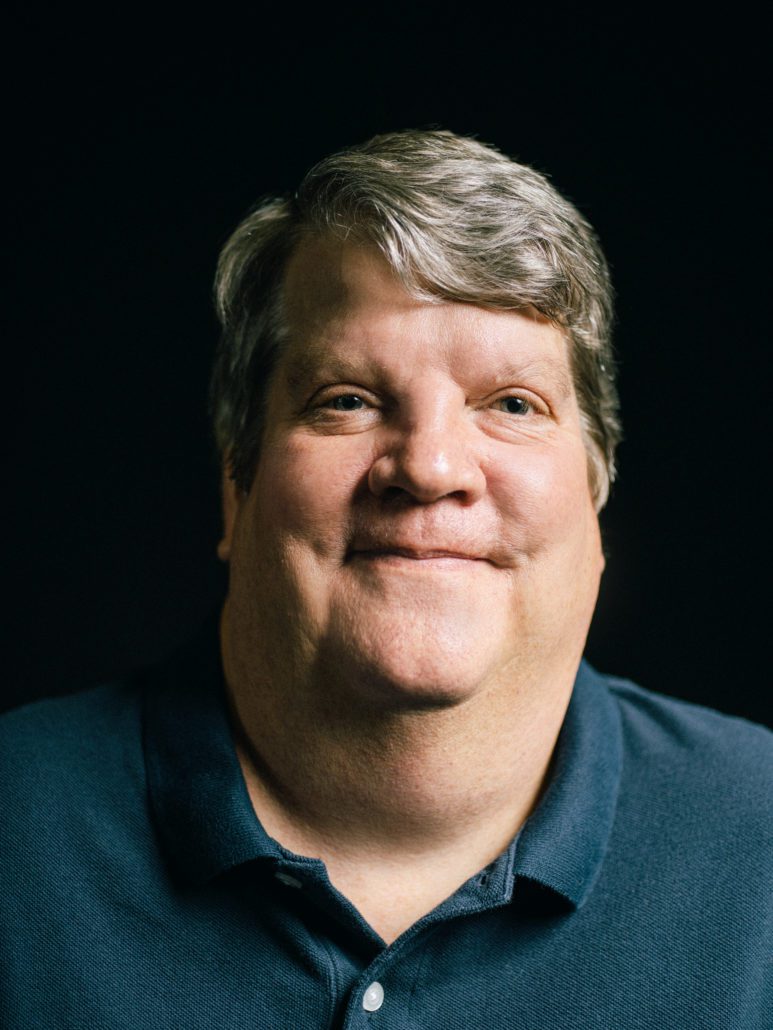
Tom Wilson, VP of Event Production, Elite Multimedia
Tom Wilson is the Vice President of Event Production at Elite Multimedia and a day one employee of the company. He has spent more than 35 years in live music, primarily as an audio engineer and as a production and road manager, with extensive country work that includes Luke Bryan and Gary Allan.
Elite Multimedia operates the Elite Virtual Event Lab in Nashville, supporting recurring corporate broadcast work for enterprise communications teams alongside live event production for Fortune 500 corporate clients.