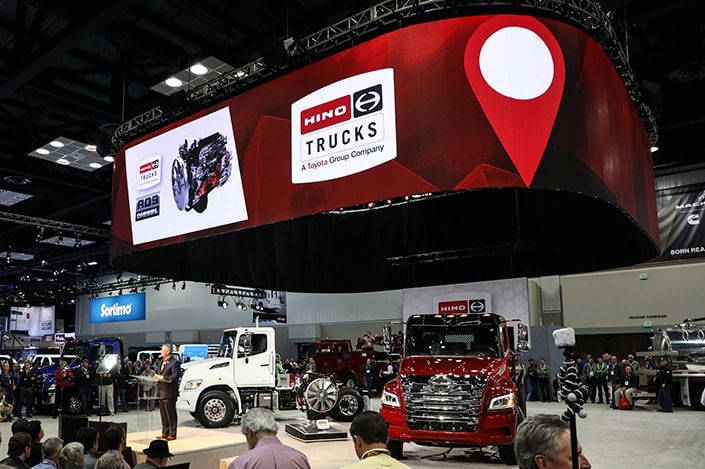
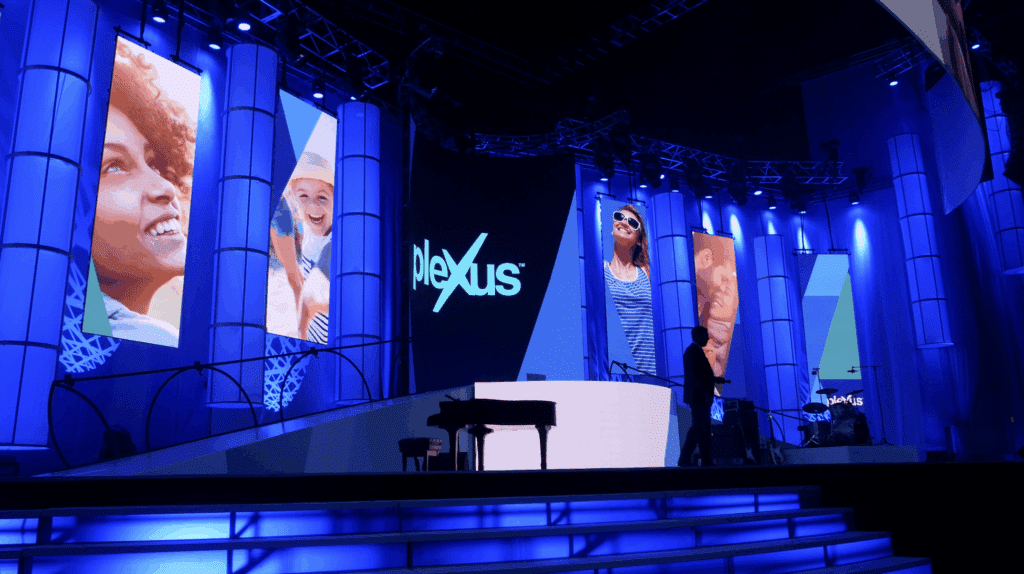
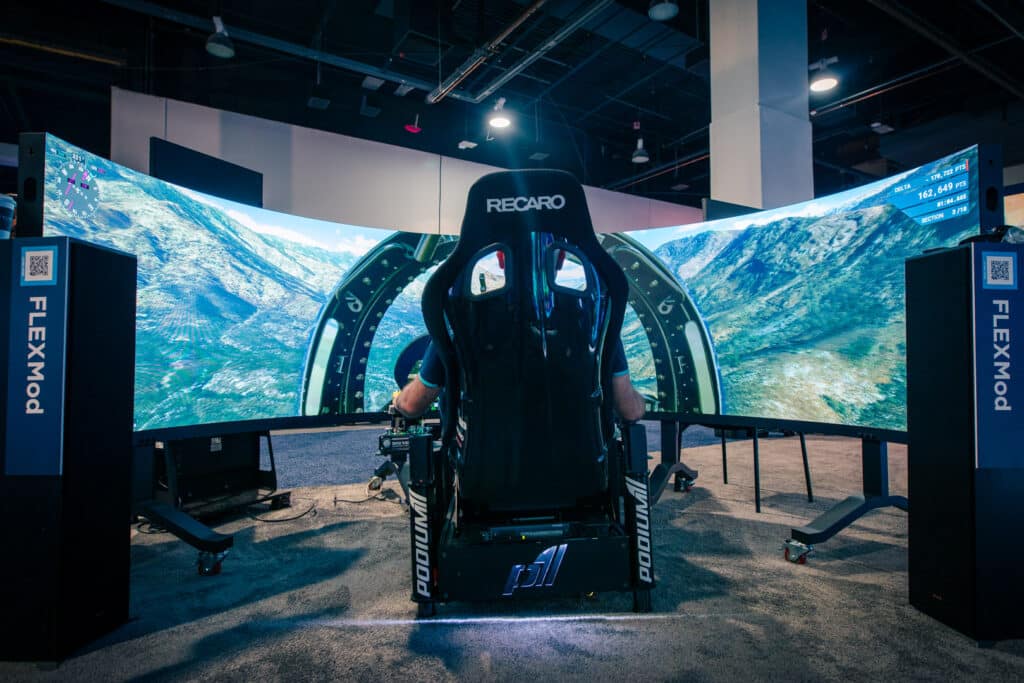
We design what the room looks and feels like: stage geometry, scenic, screen placement, lighting looks, and how the audience's attention moves through the program. Previsualization where it helps you picture it before you approve it.
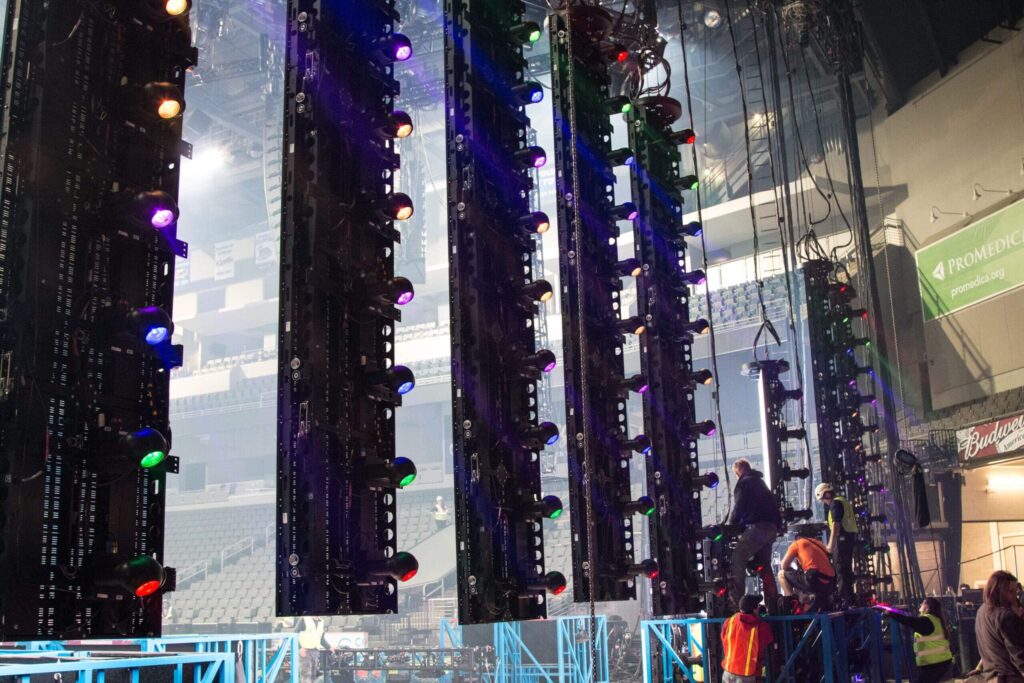
Scaled event CAD drawings of the room, plus a venue advance that confirms rigging points, power, load-in access, ceiling height, and sightlines. Your venue gets drawings they can approve rather than a conversation they have to interpret.

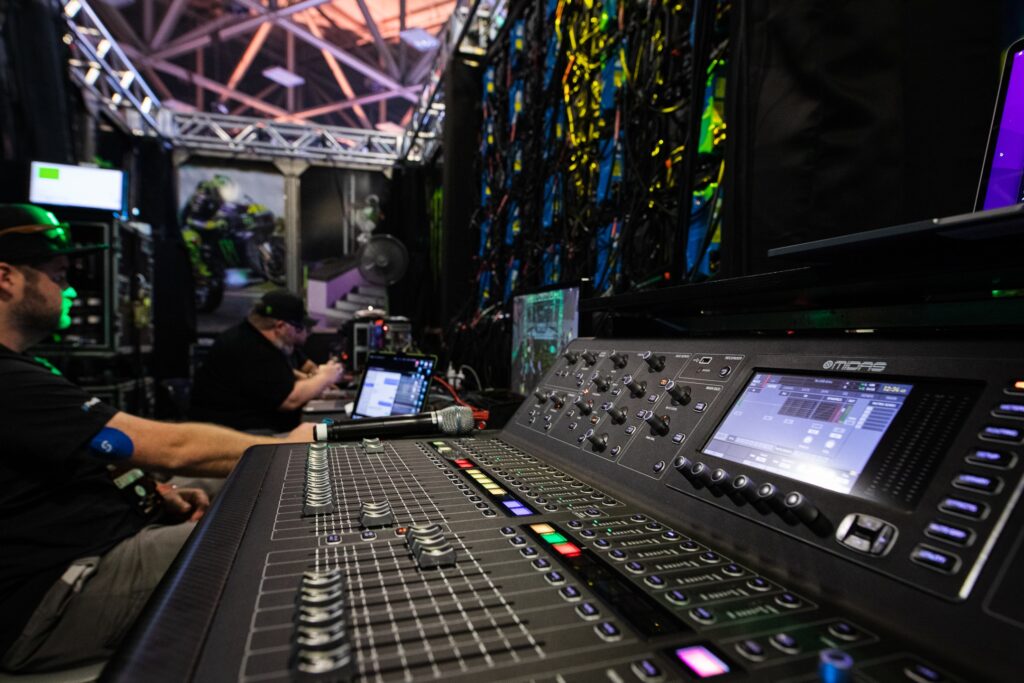
Gear lists, signal flow, power distribution, and a labor call sized to the actual build. Every discipline planned against the same drawing, so the video plan and the rigging plan agree with each other before anyone travels.
A run of show your presenters and your production team both work from: segment timing, cues, transitions, and who calls what. Rehearsal is where this gets tested, not show day.
Almost every expensive problem on an event costs very little to solve in pre-production and a great deal to solve on site. The cost difference is not marginal. It is the gap between an email in week six and a truck, a crew, and a venue clock in show week.
| Caught in pre-production | Same issue found on site |
|---|---|
| Venue cannot carry the rigging load | Redesign the hang, or lose the screen, that morning |
| Power draw exceeds the room’s service | Emergency generator or a scaled-back lighting plan |
| Screen blocks sightlines from a third of the seats | Reset the room while the audience waits outside |
| Presenter needs a confidence monitor | Send someone to find one in an unfamiliar city |
| Load-in dock is shared with another show | Idle crew billed by the hour |
This is the least visible thing we do and the reason show day looks calm. If your last production partner made show week feel like firefighting, the failure was almost certainly upstream of show week.
The plan built here is executed by the same team, covered under on-site crew and production management.
We start with what the event has to accomplish, who is in the room, and what your budget and venue actually allow. Constraints named early are design inputs. Named late they are problems.
Show design, stage and screen layout, and lighting looks, presented so you can picture the room and take it to your stakeholders before anything is committed.
We walk or advance the venue, confirm what it can carry, and produce scaled drawings your venue and your team both sign off on.
Gear lists, signal flow, labor call, and show flow handed to the crew who will run it. On our events that handoff is internal, which is why nothing gets lost in it.
Pre-production is the first phase of our full process, detailed on the corporate event production page.
The team that executes the plan, load-in through strike.