
Last updated: May 2026
The answer that most internal communications teams will give you in 2026 is some version of “Zoom, with the CEO on camera, and we hope it works.” The answer that actually produces engaged employees, retained attention, and town halls that don’t drift toward irrelevance after eighteen months is meaningfully different. And it starts with the recognition that a corporate town hall in 2026 is no longer a meeting format. It’s a broadcast format that competes with the YouTube and Netflix content your employees watch the rest of the week.
That shift matters because the employees on the other end of your town hall feed are calibrated to broadcast quality whether you provide it or not. Their tolerance for a fixed-camera, single-microphone, screen-shared deck is lower than it was in 2020. Their reaction to a polished broadcast is stronger. The production quality of your town hall is now a signal about how seriously the company takes its own internal communications.
What changed between 2020 and 2026
In 2020, every corporate town hall on the planet pivoted to virtual overnight. The standard was set by what was possible with the tools at hand, which meant Zoom Webinars, a CEO at a desk, and a deck on screen-share. Employees accepted it because there was no alternative.
By 2022, the format had calcified. Most companies kept doing town halls the same way they did during the lockdown, with the same equipment and the same production approach. The audience had moved on. Employees were watching higher-production-value content everywhere else in their lives. The town hall feed started feeling like a relic.
By 2026, the gap is too wide to ignore. Bizzabo’s 2026 State of Events Benchmark Report tracked a measurable trend in how distributed workforces respond to internal broadcasts: production quality directly correlates with attention retention, post-event engagement, and willingness to participate in Q&A. Town halls produced at broadcast quality see attention curves that hold across the full broadcast. Town halls produced at webinar quality drop off in the first ten minutes.
The two formats are now meaningfully different in audience behavior, even when the content is identical.
Three town hall formats and what each requires
Most corporate town halls in 2026 fall into one of three formats. The production scope for each is different, and the failure mode of running the wrong format for your audience is more common than internal communications teams realize.
Studio-based broadcast. The CEO and a small in-person team are in a studio environment. The entire audience joins remotely. Production scope covers studio setup, multi-camera direction with a TD calling cuts, broadcast-grade audio and lighting, branded graphics, Q&A management, and platform delivery. This is the cleanest format from a production standpoint because the studio variables are controlled.
Elite Multimedia built the Elite Virtual Event Lab in Nashville in 2020 specifically for this format. The first design decision was a dedicated control room with a TD position, not a single-camera streaming setup. That decision shaped every studio broadcast we’ve run since, including ongoing corporate communications work for Fortune 500 clients.
On-location broadcast. The CEO is in headquarters, an office space, or a venue. Production crew travels in to build the broadcast for the day. Scope covers portable lighting, audio, multi-camera setup, and the contingencies that come with any non-studio environment. Higher variability than studio work, suitable for town halls tied to a specific location (acquisition announcements at the acquired company’s office, branch openings, on-site customer celebrations).
Hybrid town hall. A live in-person audience plus a distributed audience joining via stream. Production scope covers both audiences simultaneously, which is a different design problem than either alone. The in-room audience experiences the town hall as a live event. The remote audience experiences it as a broadcast. The same content has to land both ways at the same time.
The hybrid format is the dominant choice for large enterprises in 2026, and it’s also the format most often executed below broadcast standards. The reason is structural: hybrid town halls require dual-design discipline that most internal teams aren’t staffed for.
The discipline that separates a real town hall production from a recorded meeting
Six production elements determine whether a corporate town hall lands at broadcast quality.
Multi-camera direction with a technical director calling cuts in real time. Single fixed-camera town halls look like security camera footage. Switched multi-camera direction with cuts between wide, medium, and close shots based on the speaker’s energy is what makes a CEO look like a CEO on the broadcast feed.
Broadcast-grade audio with redundant wireless microphone management. Audio is the first thing audiences notice when it fails. Lavalier or handheld microphones with hot-swap battery discipline and a dedicated audio engineer monitoring levels throughout. The internal IT team is rarely staffed for this.
Lighting designed for camera, not for the room. Three-point lighting on the speaker with color temperature matched to the camera profile. Office overhead lighting doesn’t meet this standard. A real town hall production scope brings portable studio lighting or runs the broadcast from a dedicated studio environment.
Branded graphics and content playback from dedicated playback hardware. Lower thirds, broadcast bumpers, slide playback, prerecorded video rolls, Q&A management graphics. Run from a content operator, not the CEO’s laptop.
Streaming platform management with a dedicated operator. Zoom Webinars, Microsoft Teams Live Events, Brightcove, custom Wirecast pipelines. Platform management is its own discipline. Treating it as a side responsibility of the IT team is where broadcasts go wrong at scale.
Q&A workflow that integrates in-person and remote audiences. Hybrid town halls need a Q&A system that lets the room and the stream participate without one feeling secondary. Most internal teams default to text Q&A for remote attendees and live mic for in-room attendees, which creates a two-tier participation experience.
A scope that addresses all six elements produces a broadcast that holds attention across the full town hall. A scope that addresses two or three of them produces the drift that erodes audience engagement over an eighteen-month cadence.
What the cadence question actually depends on
Internal communications teams ask “how often should we run town halls” as if there’s a universal answer. There isn’t. The right cadence depends on what the format is designed to accomplish.
Weekly all-hands cadences work best for early-stage companies where the leadership team is small enough to deliver weekly updates with substance. Biweekly cadences fit mid-stage growth companies. Monthly works for most large enterprises. Quarterly is the right cadence for strategic communications where the executive team needs runway to prepare material worth delivering.
The mistake most enterprises make is committing to a higher cadence than the substance supports. A weekly town hall in a 5,000-person company where the CEO has nothing new to say each week produces a cadence the audience starts ignoring. The cleanest model for most large enterprises is a quarterly all-hands at full production quality plus monthly written updates or asynchronous video.
For ongoing all-hands work, the production cost model that holds up is an annual retainer with a standing crew rather than per-event scoping. The reasons are practical: consistent crew produces consistent quality, the studio relationship amortizes over multiple events, and the post-event content workflow (highlight clips, social-ready segments, recap content) can run continuously.
Internal IT versus external production: where each wins
The honest division of labor for most enterprises is the hybrid model: internal IT handles platform admin, connectivity, and corporate network access. External production handles broadcast direction, on-camera production, studio or on-location setup, and the actual feed that goes to the platform.
The handoff point is the encoded video feed from the production company’s control position to the streaming platform. A weekly or pre-event sync meeting between the two teams resolves coordination issues before they show up live.
Production partners who insist on owning the entire stack, including platform admin, often create coordination friction with internal IT. The cleanest partners treat IT as the platform owner and themselves as the broadcast owner. The two roles are different and complementary.
Cost ranges for 2026
Internal communications budgets are under pressure in 2026 per Cvent’s PULSE data. Working ranges for town hall production:
- Studio-based broadcast, single event: $8,000 to $25,000 for full production scope
- Studio-based recurring cadence (quarterly): $30,000 to $100,000 annually
- On-location broadcast: $18,000 to $70,000 per event
- Hybrid town hall with full in-room and broadcast scope: $35,000 to $150,000 per event
The cost variable most internal communications teams underweight is rehearsal time. Plan for one full technical rehearsal with the executive speaker, ideally two for high-stakes broadcasts. Rehearsal is where gain levels, graphic timing, and Q&A workflow get caught before they reach the live broadcast.
Where to start
If you’re running town halls at sub-broadcast quality today and need to upgrade for 2026:
Audit your current broadcast against the six production elements above. Most teams find they’re meeting two or three of six. The path forward is closing the gap on the missing elements, not starting from scratch.
Decide on the format your audience actually needs. If your workforce is fully distributed, hybrid is the wrong choice and you should commit to studio-based broadcast. If your workforce is partly co-located, hybrid is worth the production investment.
Consider an annual retainer with a production partner for recurring cadences. Per-event scoping for weekly or monthly town halls produces inconsistent quality over time. Standing crew produces the consistency the cadence needs.
Build the recap content workflow into the production scope from the start. The town hall live broadcast is the small share of the total value. The clips, highlights, and asynchronous derivative content that come out of the broadcast is where most of the internal communications return lives.
If you want to talk through what town hall production should look like for your specific cadence, start with our corporate event production services.
Frequently Asked Questions
What does professional corporate town hall production include?
It covers the six elements that separate a broadcast from a recorded meeting: multi-camera direction with a technical director calling cuts, broadcast-grade audio with redundant wireless mics and a dedicated audio engineer, lighting designed for camera, branded graphics and content playback from dedicated hardware, streaming-platform management with its own operator, and a Q&A workflow that treats in-room and remote audiences equally. Internal IT teams are rarely staffed for all six at once.
What are the three corporate town hall formats, and which one fits us?
Studio (the CEO and a small team in a controlled studio, the full audience remote), on-site (crew travels to a headquarters or venue and builds the broadcast for the day), and hybrid (a live in-room audience plus a distributed audience on stream). Hybrid is the dominant choice for large enterprises in 2026 and the one most often executed below broadcast standard, because it means designing for two audiences at once. We built the Elite Virtual Event Lab in Nashville in 2020 specifically for the studio format, with a dedicated control room and a TD position.
How often should we produce a town hall at broadcast quality?
It depends on your audience size, how distributed your workforce is, and what leadership is reinforcing. Not every update needs a full broadcast, but the recurring all-hands that shapes how employees feel about the company benefits from consistent production. The goal is attention that holds across the full broadcast rather than dropping off in the first ten minutes, which is what happens at webinar quality.
Can our internal IT team run it, or do we need an external production partner?
Internal IT is fine for routine, low-stakes updates where a stable video feed is enough. An external partner earns its place when the town hall is a signal: an all-hands the whole company watches, an acquisition announcement, a leadership moment, where multi-camera direction, broadcast audio, camera-first lighting, and dedicated streaming operation are the difference between a CEO who looks like a CEO and security-camera footage.
How much does corporate town hall production cost in 2026?
It depends on format and scope. A single-location studio broadcast is the most controlled and predictable; hybrid runs higher because you are producing for two audiences at once. We scope each element (cameras, audio, lighting, graphics, streaming, Q&A) to your event rather than quoting a flat package, and we give you a defensible range for your format before you commit.
About the Author
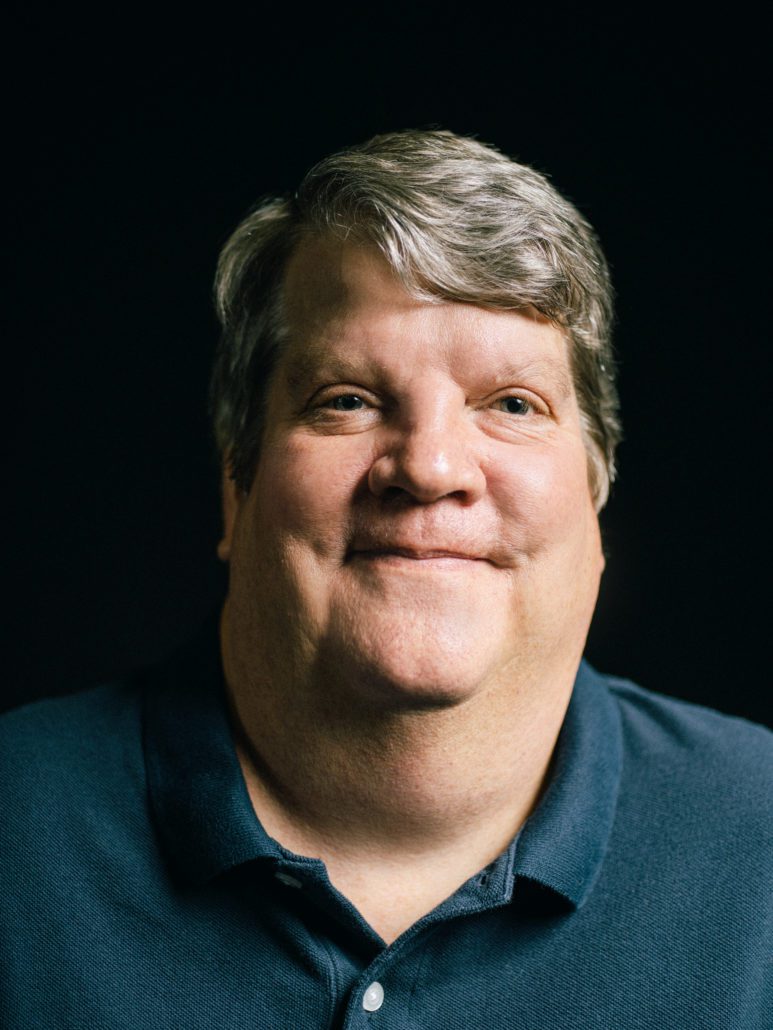
Tom Wilson, VP of Event Production, Elite Multimedia
Tom Wilson is the Vice President of Event Production at Elite Multimedia and a day one employee of the company. He has spent more than 35 years in live music, primarily as an audio engineer and as a production and road manager, with extensive country work that includes Luke Bryan and Gary Allan.
Elite Multimedia operates the Elite Virtual Event Lab in Nashville, a studio purpose-built in 2020 for corporate broadcasts, town halls, and brand activations. The studio has produced recurring all-hands and quarterly broadcast work for Fortune 500 corporate communications teams.