
Last updated: May 2026
Search for “corporate event ideas” in May 2026 and the first page is mostly bullet-point lists of trust falls, escape rooms, and team trivia. The lists are not wrong, exactly. They are just answering a different question than the one most senior corporate event managers are actually asking when they search.
The real question, the one that brings marketing directors and corporate communications leaders to this search, is closer to: “What corporate event format will actually move the business outcome leadership cares about, executed at the production level our brand requires?” That question has different answers than the trust-fall lists, and the answers depend on who the event is for, what it needs to accomplish, and what production capability you have access to.
This is a 2026 view of what corporate event ideas actually work at enterprise scale, organized by the business outcome the event should produce. The ideas that follow assume professional production execution, which is what separates the formats below from the consumer-grade ideas dominating most corporate event roundup content.
Ideas for customer-facing impact
Events designed for customers, prospects, or partners. The business outcome is pipeline, brand equity, or customer retention. Five formats hold up at scale.
The brand-engineered product reveal. A product unveiling designed around a single moment of revelation. The 2026 version is more engineering-heavy than the 2020 version because the post-event content distribution carries the activation’s return. Works for vehicles, hardware, software platforms, fashion, anywhere the product has visual or sensory impact. Production cost ranges from $150,000 to $500,000 for standard scope, mid-six-figures and up for flagship engineering work. The HINO Trucks XL8 reveal at the 2018 Work Truck Show is the working reference for what custom engineering looks like at the high end: 288 LED panels, twelve Kinesys motors, synchronized reveal in front of 2,000 spectators. (Project detail.)
The multi-day customer conference. A 3-4 day event built around customer education, networking, and brand reinforcement. The format is mature, but the production discipline that separates a strong customer conference from a forgettable one is multi-day operational consistency. Crew rotation, equipment refresh, and day-three quality holding the same standard as day one. Elite Multimedia’s work on the Plexus National Convention, with multi-day programming for brand ambassadors integrating speakers and musical acts, is a useful reference for the discipline. (Project detail.)
The intimate executive dinner program. A series of small executive dinners hosted in major markets. Lower production cost than flagship events but higher per-attendee investment. The 2026 trend toward smaller, more intentional formats favors this approach for high-value B2B relationships.
The branded entertainment experience. A brand-hosted entertainment event open to customers and prospects. Combines live performance with brand activations. Production scope sits between concert production and corporate event execution. Higher complexity than a standard customer event but produces stronger brand memory.
The user-generated content moment. An event designed around customers contributing to the experience itself: a stage program built from customer stories, a brand environment customers shape in real time, a product showcase featuring customer use cases. Works when the customer base is engaged enough to participate substantively.
Ideas for internal employee impact
Events designed for employees. The business outcome is engagement, retention, or strategic alignment. Five formats are worth considering.
The hybrid sales kickoff. A sales kickoff that runs as a high-production broadcast for distributed sales teams, with a smaller in-person leadership audience driving energy. The format makes sense for sales orgs over 500 sellers where bringing everyone in person isn’t operationally efficient. Production cost ranges from $250,000 to $1.2M depending on scope and broadcast quality.
The studio-based recurring all-hands. A weekly or biweekly all-hands broadcast scaled to the entire company, produced at broadcast quality from a dedicated studio. The format itself isn’t novel. What’s novel in 2026 is treating it as a recurring broadcast asset rather than a meeting. Studio infrastructure like the Elite Virtual Event Lab in Nashville is what enables consistent quality across long-running cadences without per-event quality drift.
The internal awards or recognition show. A staged annual recognition event produced at award-show quality. Stage, lighting, professional MC, video packages introducing each award. The production decisions affect cultural retention more than the awards themselves.
The strategic offsite with broadcast integration. A senior leadership offsite produced with broadcast capture for the rest of the company to follow asynchronously or in real time. Reduces the “what did they decide in the room” gap that follows most executive offsites.
The branded employee experience. Holiday parties, milestone celebrations, anniversary events produced at brand-statement level. These get under-invested historically because internal events feel optional. In 2026’s tight talent market, the cultural retention argument has gotten stronger.
Ideas for brand marketing impact
Events designed for broader brand reach. The business outcome is awareness, perception, or thought leadership. Three formats work at enterprise scale.
The branded festival or experience day. A brand-hosted festival or experience event open to customers, prospects, or community members. Combines live entertainment with brand activations. Higher production complexity than standard customer events.
The pop-up retail or brand environment. A short-run physical space designed as a brand expression, with retail, content, activation, and social-media-ready moments built in. Works for direct-to-consumer brands and any brand with strong physical product identity.
The branded broadcast series. A recurring branded broadcast that lives on streaming platforms with episodic content built around the brand’s expertise. Production scope is closer to television series than event production but uses the same studio infrastructure. The 2026 version of this format is gaining adoption as B2B marketing teams build owned content channels.
The ideas that don’t hold up at Fortune 500 scale
Some corporate event formats that dominate the roundup content perform poorly in practice for senior corporate audiences.
The team-building obstacle course or escape room format is fine for departmental gatherings. It’s not fine for any event where executives need to feel the company is taking them seriously. The signal value of the format works against the brand for senior audiences.
The generic networking happy hour produces lower engagement than its budget would suggest. Networking is the byproduct of well-produced events, not a format on its own. Standalone networking events trade on the assumption that proximity creates connection. At enterprise scale, it usually doesn’t.
The themed conference (pirates, casino night, decades nostalgia) reads as low-effort to executive audiences regardless of how much budget went into the theme. The 2026 trend toward more intentional formats specifically pushes against themed approaches.
The motivational speaker keynote without strategic content fails to land for sophisticated audiences. The format made sense in the 1990s. It has aged badly.
What separates a good corporate event idea from a good corporate event
The idea itself is only part of the equation. The production work that turns an idea into an actual event is what determines whether the idea lands.
The production discipline that separates strong execution from generic event production in 2026:
Custom design work that begins from the brand and the audience, not from the production company’s available inventory. Generic event production starts from inventory and works backward. Custom activation work starts from concept and engineers forward.
Engineering capability appropriate to the format. A reveal moment, a custom installation, an automated brand activation requires custom fabrication, automation integration, and show control programming. Most event production companies don’t have these capabilities. The ones that do are usually tour-grade shops or experiential specialists.
Production timeline appropriate to the ambition. Custom corporate event formats need 14-20 weeks for flagship work. Compressed timelines compromise engineering quality.
Post-event content workflow integrated into the production scope. The corporate events that produce sustained return are the ones with content cycles that work past the live event date.
How to scope the next move
If you’re sourcing corporate event ideas for 2026 or 2027:
Start with the audience and the business outcome the event should produce. Match the format to the audience and the outcome, not the reverse. Top-of-funnel customer events are different from internal employee events are different from brand-marketing activations. The format that works for one usually fails for the others.
Evaluate ideas against the production capability you have access to before committing. Ambitious ideas without production engineering capability produce expensive disappointments. The fastest filter is to test the idea with a production partner in the first concept conversation.
Budget for the post-event content cycle from the start. The events that produce sustained return in 2026 have content workflows built in, not bolted on after the fact.
For specific scoping on a corporate event concept, bring in our corporate event production team or browse our event production portfolio.
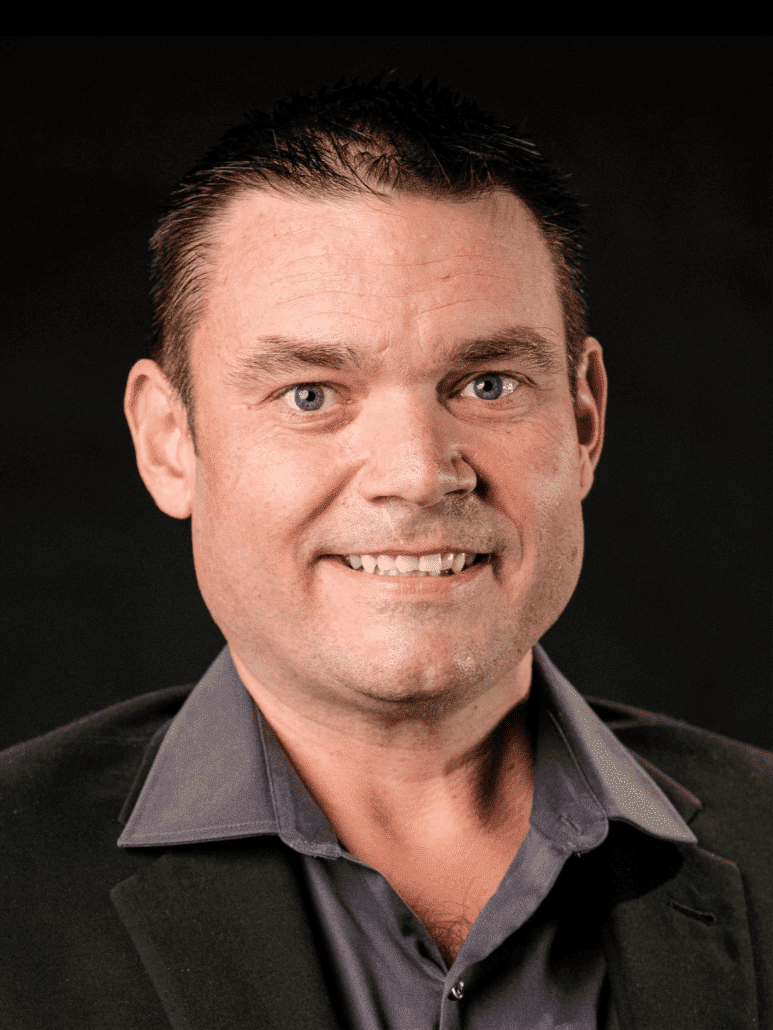
About the Author
Jeremy Byrd, Founder, Elite Multimedia
Jeremy Byrd founded Elite Multimedia in 2009 and has more than 25 years in the music industry. He started as a technician with Student Life, where he became Video Director and then Technical Director over every technical element including lighting and video. He built Elite out of the house of worship market before expanding into country music and then into AV and LED for corporate events and trade shows.
Elite Multimedia is a Nashville-based event production company supporting Fortune 500 corporate clients alongside named projects including the HINO Trucks XL8 Reveal and the Plexus National Convention.