
Last updated: May 2026
The brand activation industry has been moving in a direction most marketing leaders haven’t fully internalized yet. The flagship activations getting trade press coverage in 2026 are not the biggest budget productions. They are the most engineered ones. Smaller in physical footprint, deeper in technical custom work, designed to produce content that compounds across distribution channels for years.
The shift matters because it changes who you should be hiring and what you should be paying them for. The brand activation production landscape now rewards specialists who can engineer custom moments at high precision over generalists who can stage large environments at scale. The procurement math has inverted from where it was in 2018.
What the trade press is actually covering in 2026
A look at the brand activation campaigns getting industry recognition in the last twelve months shows a consistent pattern.
The activations attracting coverage are technically ambitious, with custom engineering at the center of the concept. Concealment reveals using LED architecture, projection mapping on bespoke surfaces, automation systems integrated with show control, custom fabrication tied to brand storytelling. These are not activations that can be assembled from inventory.
The activations attracting coverage are designed for the camera as much as for the live audience. The footage outlives the event. Brand teams are budgeting for activation production with explicit content-distribution requirements baked into the brief: ISO camera coverage, B-roll capture, social-ready vertical edits, behind-the-scenes documentation.
The activations attracting coverage cost more per impression than scaled-volume brand experiences. But they produce content libraries that work for years across PR, social, sales enablement, and brand recap channels. The ROI math has shifted from cost-per-attendee to cost-per-impression-across-distribution.
Content Marketing Institute’s 2026 outlook captured the trend at the budget level: 33% of B2B marketers rank events and experiential marketing as a top-three spending priority for 2026. The category isn’t shrinking. It’s consolidating into fewer, more ambitious activations.
What makes a brand activation actually work
Three things determine whether a brand activation produces the impact the brief promised.
The moment is engineered, not staged. A brand activation that depends on a reveal, a transformation, or a controlled brand moment requires custom production work that doesn’t come out of an inventory catalog. The HINO Trucks XL8 Reveal at the 2018 Work Truck Show is a useful reference for what this engineering work looks like at the high end. The brief was a product reveal “never before seen in the commercial truck industry.” The execution required 288 PixelFLEX FLEXlite Plus 3.9mm LED panels arranged as a 360-degree ground-level concealment, lifted vertically in synchronized motion by twelve Kinesys one-ton motors on a single cue, with audio and lighting timed to land in the same two-second window. The reveal drew 2,000+ spectators on day three. (Project detail.)
What the execution illustrates: the LED panels are commodity hardware. The automation is commodity hardware. The lighting fixtures are commodity hardware. The work is making them converge on a single beat at concert-grade precision. That’s engineering, not staging.
The audience experience is designed for both the room and the lens. Brand activations that succeed in 2026 are produced for two audiences simultaneously: the people in the room and the people who will see the activation in content distribution. The two audiences experience different versions of the same moment, and production design has to serve both without compromising either.
This is the discipline that separates production companies who do brand activation work from AV vendors who happen to set up gear for activations. The first group thinks about camera angles, lighting reads on lens, content cutting, and post-event capture from week one of scoping. The second group treats content capture as a separate scope that happens alongside the live event.
The two-partner model is in the room from concept day one. The creative agency owns concept, brand storytelling, and audience strategy. The production company owns engineering, fabrication, and execution. Both partners in the room from week one of the concept brief.
The HINO XL8 launch followed this model. Sully Communications led creative strategy. Phluent designed the audience experience and brand storytelling. Elite Multimedia engineered and executed the production. The three partners collaborated through the entire concept-to-reveal cycle, which is what made the cue-locked execution possible.
When the two-partner model breaks, it usually breaks in one of three ways. The creative agency designs a moment the chosen production company can’t engineer. The production company optimizes for technical execution and dilutes the brand intent. The brand client treats the partners as sequential vendors with creative finishing before production starts, which leaves no calendar time to engineer the moment the brief describes.
The 2026 budget reality for brand activations
Brand activation budgets in 2026 are facing the same cost pressure as the rest of the event industry. Cvent’s December 2025 PULSE survey put cost expectations at 5-14% above 2025 for most planners, with 63% actively looking for cost savings that don’t compromise the attendee experience.
The dynamic showing up in brand activation specifically is consolidation. Marketing leaders are concentrating budget into fewer activations with deeper engineering, rather than spreading across many smaller activations at lower production quality. Venuescanner’s UK industry data tracked the same trend: companies leaning into smaller, more intentional formats with higher per-person investment.
The honest framing for marketing leaders evaluating brand activation production is to think about return on content distribution, not return on in-room audience. A reveal moment that costs $400,000 to engineer and reaches 2,000 people in the room is not a $200-per-person activation. It’s an activation that produces a content library doing brand work for hundreds of thousands of impressions in the eighteen months that follow. The math has to include both audiences.
Where the production work actually separates good from generic
The shortlist of production companies who can execute custom brand activation engineering at the level the 2026 trade press is covering is smaller than most procurement processes assume. The credentials that predict execution quality:
Named brand activation case studies with specific clients and verifiable engineering details, not generic “experiential” portfolio photos. A production company who can describe the actual engineering on a recent activation in technical terms is operating at the right level.
Show control and automation capability with named software stack. Brand activation work depends on programmed cue execution. Production companies running shows from professional show control software (Crestron, Medialon, Watchout) with automation integration are equipped. Production companies running shows from spreadsheets are not.
A technical director with brand activation experience who you can name on your team in week one. The TD is the single most important hire on an activation production team. Vendors who pivot to “our team will be assigned closer to the date” are not equipped for activation-grade work.
Track record of activations that produced post-event content yield. The activations that generated PR coverage, social distribution, and sales enablement footage are the ones whose production teams understood content distribution as a first-class concern, not an afterthought.
The contrarian observation worth flagging: the production companies who reliably deliver brand activations at trade-press-worthy quality are often tour-grade production shops with custom activation experience, not the biggest national rental companies. Tour production teaches the show control discipline, the on-stage judgment under pressure, and the redundancy thinking that brand activations require. Elite Multimedia’s work on the Alan Jackson “Keepin’ It Country” tour and Cole Swindell’s “Win the Night” tour is operationally connected to how we engineer Fortune 500 brand activations like the HINO XL8 reveal. Most marketing procurement processes underweight this credential.
What this means for scoping in 2026
If you’re scoping a brand activation for late 2026 or 2027:
The budget conversation should start from the engineering required to deliver the moment the brief describes, not from a target activation cost. The brief either fits the budget or the budget needs to move. Trying to compress engineering scope to fit a budget produces activations that fail to deliver the brief.
The timeline should be 14-20 weeks for activations with custom fabrication, automation, or LED concealment. The constraint is fabrication and rehearsal calendar time, not procurement availability. Compressed timelines compromise engineering quality, which is where activation moments most often fail.
The post-event content distribution should be planned into the production scope from concept day one. ISO camera coverage, B-roll capture, social-ready edit workflows, behind-the-scenes documentation. Bolting content capture on after the activation is designed produces lower-quality content than building it in.
The two-partner model with a creative agency and a production company in the room from week one is worth the additional procurement overhead. Single-partner models where one team does both rarely deliver activation engineering at the level the trade press is covering.
For specific scoping on a brand activation brief, see our corporate event production capabilities or browse our event production portfolio.
About the Author
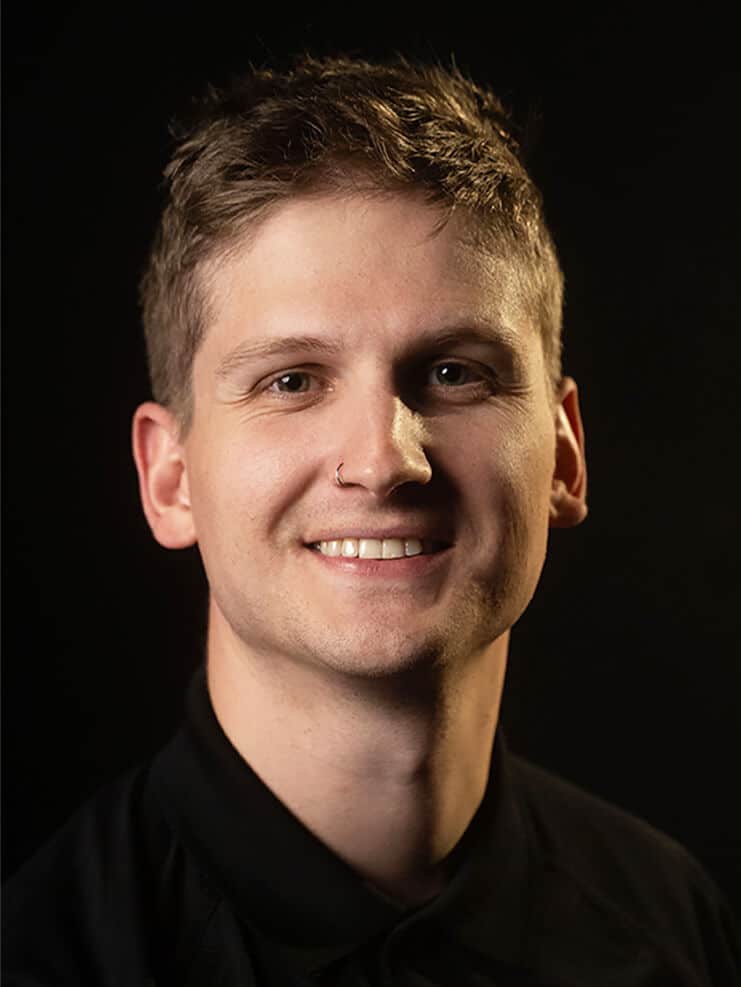
Ben Anholzer, Director of Account Management, Elite Multimedia
Ben Anholzer is Director of Account Management at Elite Multimedia, with 14 years in the industry. He has worked at every level of the chain, from dock tech and shop tech to live event tech, production manager and Account Manager, and he designs the interactive systems Elite builds for trade shows and corporate events.
Elite Multimedia engineered the HINO Trucks XL Series reveal at the Work Truck Show in collaboration with Sully Communications and Phluent. Elite’s brand activation portfolio includes Fortune 500 corporate work alongside touring production for artists including Alan Jackson and Cole Swindell.