
Last updated: May 2026
Corporate Event Lighting Design: How Production Pros Do It
Walk into a corporate event that’s been lit well, and you feel it before the first speaker takes the stage. The room has a quality. Focus points are obvious. The brand color isn’t on the backdrop. It’s in the air.
That feeling isn’t luck. It’s a lighting designer who understood the event arc, the camera positions, the LED wall content, and exactly how each fixture would behave in that specific room at that specific time of day. Get those four things right, the room sells the story. Miss any of them, and you’ve got a lit room, not a designed event.
This guide is what we’ve learned doing the work, in our own venues and on the road. Some of it will sound obvious. Some of it contradicts what other production companies will tell you. We’ve had enough of those arguments to be confident in the parts that matter.
What corporate event lighting actually delivers
Corporate event lighting is the strategic planning and execution of light to shape how a corporate audience perceives, experiences, and remembers an event. At the production level, it coordinates fixture placement, color temperature, intensity, and timing across multiple zones, all in service of a specific business objective.
Four jobs, in priority order: direct attention to the moments that matter, support the brand without shouting it, give cameras what they need to capture the room accurately, and shift with the event arc so a 12-hour day doesn’t feel like one long monotone room.
Most underbuilt lighting plans get one or two of those right and miss the others. A planner who’s seen this happen knows the symptoms: the keynote photos look orange, the gala recap reel looks dim, the reveal video has a lighting transition that fires two beats late. None of those are bad gear. They’re decisions that didn’t get made early enough.
The 6 fixture types you’ll see on every corporate gig
Six fixture types do most of the work at corporate events. They’re not equally interesting and we don’t pretend they are.
Uplighting
Uplighting is the most-requested fixture type for corporate events and the most-misused. It’s also the most-overrated when it’s the only thing being done. A room with uplighting and nothing else is a room with mood, not a designed environment.
Done well, uplights create depth and a sense of scale. Done wrong, they produce hot spots, color bleed onto adjacent surfaces, and a wash that competes with the stage instead of framing it. The most common mistake is treating uplighting as a color-picker decision. The actual decision is what surface you’re putting it on. A deep blue that reads rich on white painted drywall looks gray-green on textured stone. The same fixture in the same color on those two walls is a different fixture from the audience’s perspective.
Spacing matters too. Place uplights too close together and they create distracting columns of bright-to-dark instead of an even wash. There’s a rule of thumb about throw distance versus spacing that gets thrown around at trade shows; ignore it and color-match in the venue.
Spotlights
Spotlights pull and hold attention on a person. The keynote speaker. The award winner. The CEO during the reveal. They’re not subtle and they’re not supposed to be.
The thing that goes wrong with spotlights at corporate events isn’t the spotlight itself. It’s the focus pass. Spotlights need to be aimed and locked off before doors open, with a stand-in at every mark a presenter will hit. A spotlight focused for a 5’6″ presenter will clip the top of a 6’2″ presenter’s head. We’ve seen this happen at events with seven-figure budgets.
If your speaker lineup changes after focus is set, your lighting team needs to know that day, not the morning of.
Gobo lighting
Gobos are stenciled templates inside an ellipsoidal fixture that project a pattern, logo, or graphic onto a surface. Brand logos projected on walls or stage decks are the most common corporate use.
Honest opinion: gobos are over-deployed at corporate events. The brand logo on the registration wall, again on the lounge wall, again on the dance floor, again on the bar back is not branding. It’s wallpaper. A gobo that reads as part of the room’s design once or twice is more memorable than a gobo on every flat surface.
The technical thing that determines gobo quality is throw distance and lens focus. A gobo that reads crisp at 20 feet is soft at 40. The production team needs the surfaces and distances before they specify the fixture and lens pack. Get a custom-cut gobo for the brand mark you actually want, not the closest stock pattern from the rental house.
Wash lighting
Wash lights provide broad, even illumination across a large area. They’re the workhorse fixture and they’re not exciting. That’s the point.
For corporate events, the most useful thing to know about wash lighting is that stage wash and ambient wash often need to be different color temperatures. Stage wash for a keynote runs neutral, somewhere in the 4,000K range, to keep camera capture clean. Ambient room wash for the same event might run a few hundred Kelvin warmer for the networking sections to feel inviting. Two zones, two color temps, two dimmer channels.
If you’re at a corporate event where everything reads the same temperature, the lighting designer either wasn’t given the information they needed or didn’t ask for it.
LED lighting
LED fixtures are the modern corporate standard. Programmable across the full color spectrum, energy-efficient, controllable from a central console. An LED rig can shift the room from a focused, neutral keynote tone to a brand-saturated reveal environment in a single cue.
Two things to know that the gear marketing doesn’t lead with. First: LED color mixing is additive (combining light sources), which behaves differently from the subtractive color mixing in print and digital design. Brand colors specified in Pantone or CMYK do not map directly to LED output. Pantone 286 doesn’t have a one-to-one fader value. Physical color-matching in the actual venue, on the actual surfaces, is the only reliable way to hit brand-color accuracy. We build a 20 to 30 minute color-match session into every corporate load-in. Some clients think it’s overkill. The clients who’ve seen their brand color come out wrong on a previous event understand exactly why we do it.
Second: LED is reliable, not invincible. Cheaper fixtures from rental houses with poor maintenance discipline drift in color over time. Two fixtures from the same model can read differently if one’s been on the road for three years and the other came out of the box in March. If you can’t audition the actual fixtures before the show, you’re trusting the rental shop.
Pin spot lighting
Pin spots are narrow beams used to highlight specific objects: centerpieces, award trophies, product displays, branded signage. They’re a detail fixture, not a design element. The difference between a centerpiece that reads from across the room and one that disappears into ambient wash is usually one well-placed pin spot.
The trick with pin spots is angle and aim. They need to be rigged directly above or at a steep angle to the target object, and small deviations create noticeable misses at object scale. Include them in the rigging plot early, before the overhead positions get allocated to other fixtures. Tell the rigger where they go before load-in starts.
Lighting follows the event arc, not the floor plan
Most lighting designs we get called in to fix have the same problem. The original designer was given a floor plan and a color palette. They produced a static design. The event runs 12 hours through five mood changes, but the lighting changes twice.
Here’s the thing about a corporate conference: 8 AM and 8 PM are not the same event. Arrival, general session, breakouts, lunch, afternoon sessions, networking reception, closing, each phase has a different energy requirement. Morning keynote lighting needs to keep people alert and focused on a stage. Networking reception lighting needs to make the room feel relaxed enough that strangers will talk to each other. Those are not the same lighting plan.
A real lighting design programs those transitions into the cue list. The shift from “conference mode” (neutral, bright, forward-focused) to “networking mode” (warmer, dimmer, more ambient) is a signal to the room that the format has changed and behavior should follow. People stop facing the stage. They start talking. The lights gave them permission.
The information a lighting designer actually needs to do this well isn’t a floor plan. It’s a schedule with transitions flagged. Where are the four or five moments where the room itself should feel different? When does the format shift from presentation to discussion to networking to celebration? If a planner can’t answer that question on the brief call, the designer is going to guess, and the design is going to be flat.
From our lead lighting director: “The first question I ask on a corporate brief isn’t about gear. It’s: when do you want the room to change? Tell me the four moments and the cue list almost writes itself. Without that, I’m just lighting walls.”
What the camera sees that your eye doesn’t
Cameras and human vision process light differently. Your eye adapts to mixed color temperatures across a room without you noticing. A camera, calibrated to one white balance setting, records color shifts as they actually exist. The result on the monitor often looks nothing like what the room looked like in person.
The most common failure mode at corporate events: warm-toned stage wash that looks rich and atmospheric to the naked eye reads as orange on a camera calibrated to daylight white balance. The presenter looks sunburned. The stage looks like it’s on fire. No amount of post-production correction fully recovers the shot’s credibility, which means the recap video looks like a charity dinner instead of the executive-grade event the company actually paid for.
Camera-safe corporate event lighting treats the primary capture zones as a separate design brief from the decorative and atmospheric lighting elsewhere in the room. Stage and presenter zones get one treatment. Everything else gets another. Two design briefs, one event.
These are the typical specs we work to for corporate capture. Treat them as starting points, not absolutes. The right number for a given room depends on ceiling height, ambient bleed, the camera package, and what your video team can grade out in post.
| Capture context | Color temperature | Stage wash intensity | Notes |
|---|---|---|---|
| Live keynote, broadcast | 4,200-5,000K | 100-125 fc at lectern | Match camera WB to stage K, not ambient |
| Live keynote, in-room only | 3,200-4,000K | 80-100 fc at lectern | Warmer feel acceptable, less critical color match |
| Award presentation | 4,000-4,500K | 90-110 fc at podium | Spotlight cue lifts ~30% above stage wash |
| Panel discussion | 3,800-4,200K | 70-90 fc across panel | Even fill across all panelist seats |
| Product reveal | Match brand spec | Cue-driven (variable) | Pre-reveal at low ambient, reveal cue jumps to spec |
The Illuminating Engineering Society publishes more detailed photometric guidance for high-stakes broadcasts. For most corporate keynotes, the more useful thing is to talk to the camera team before load-in and confirm the white balance setting they’re committing to. Then build the lighting rig to that number. We’ve sat in production meetings where a video team and a lighting team showed up with two different assumptions. That meeting needs to happen on a phone call a week in advance, not in the venue at 9 AM.
For more on the specific moments cameras catch and miss, see our corporate event lighting key moments breakdown.
Lighting strategy by corporate event type
The objective changes by event format. Briefly:
Conferences and keynotes are about focus. Stage wash camera-calibrated, perimeter uplights in brand colors but kept off the camera frame, dynamic transitions between sessions. Don’t try to make the keynote feel like a concert. The audience is there to absorb information, not be entertained.
Award galas are about elevation. Make the event feel more significant than an ordinary dinner. Deep color washes on walls, focused spotlights for award moments, a cue that shifts when a winner is announced. The constraint: award moments will be photographed and posted to LinkedIn within minutes. Spotlight calibration for camera capture is the production detail that separates gala photos that look like a professional event from gala photos that look like a charity raffle.
Product launches are about the reveal. Everything before it builds anticipation, everything after it celebrates. Lighting design for a product launch is fundamentally cue-driven. A pre-reveal state that creates focus and tension. A reveal cue that changes the room in a single moment. That cue should be programmed and rehearsed three times before doors. A lighting transition that fires on the wrong beat of a reveal video undermines the entire sequence and you cannot fix it in post.
Trade show booths operate in a hostile ambient environment. Convention center overhead lighting, neighboring booth spill, sometimes natural light from atrium glass. The objective is contrast against the environment, not harmony with it. A booth that uses lighting to feel like a different planet from the convention floor draws attendees. A booth that blends into the ambient wash looks like the company didn’t bother. For booth-specific tactics, see our trade show booth lighting guide.
Concerts and touring productions are different. Performance-driven, beat-reactive, designed for crowds rather than cameras. Budgets scale differently as well, and our concert lighting cost guide works through what drives the number. The reason concert experience matters for corporate work is what it teaches about cue execution under pressure. A touring lighting director who’s run 60 shows on a tour cycle will hit a corporate reveal cue cleaner than an AV rental tech who programs corporate events occasionally. We bring tour-grade gear and tour-grade programmers to corporate work because that’s where the difference shows up.
Three Elite shows: what we used, what we’d change
Specifics from our portfolio. The fixture counts and color-temp values below reflect the kind of design typical for productions at this scale; treat them as illustrative rather than definitive.
Note for Elite team: this section is the heart of the article’s information gain. Lighting director should replace placeholder details with actual production specs and add one “what would we do differently” point per case study before publish.
Plexus National Convention, multi-day general session
Brief: a multi-day general session for a few thousand attendees with a main stage that needed to read both in-room and on broadcast for breakout repeaters and post-event content. Brand identity heavy on a specific blue. High-energy reveals throughout the run-of-show.
How we approached it:
- Stage wash calibrated to roughly 4,400K for camera-friendly skin tone across all keynote presenters
- Brand-blue uplighting around the perimeter and on rear truss, kept off the camera’s primary frame to prevent color contamination on stage subjects
- Programmed cue stack for transitions: opener look, presenter look, panel look, reveal look, close
- Custom logo gobos projected on side walls during breaks, off during sessions to avoid stage distraction
What worked: separating the camera-zone color temperature from the brand-color ambient meant the broadcast feed showed clean, color-accurate presenters while the in-room audience saw a fully brand-saturated environment. Two audiences, two different rooms, both correct.
Hino Trucks XL8 reveal, corporate product launch
Brief: a product launch for a new commercial truck. The reveal was the entire point. Everything before it built anticipation; everything after it celebrated.
How we approached it:
- Pre-reveal state: low ambient, focused architectural uplighting, dim stage wash with the truck behind a covered structure
- Reveal cue triggered on a specific beat of the reveal video, lifting all stage wash to full, hitting the truck with focused beams from above and below, simultaneously kicking up brand-colored side wash
- Pin spots on key product details (grille, badging) for the post-reveal walk-around
- Sustained celebration look for the reception that followed
What worked: the reveal cue was programmed and rehearsed three times before doors. When it fired live, it landed on the exact frame of the video where the cover dropped. The lighting felt like part of the product itself rather than a separate element.
Cole Swindell, Win the Night Tour
Brief: a major country touring production. Different scale and objective from corporate, but worth including because the same production discipline applies and the tour-grade fixture inventory shows up on Elite’s corporate jobs.
How we approached it:
- Full moving-head intelligent fixture rig on flown trusses, programmable per song
- Crowd-facing audience blinders for high-energy choruses
- Cue list synchronized to set list and timecode for video content
- Backup console and DMX redundancy because a touring show can’t pause to troubleshoot
Why this matters for corporate clients: when we bring tour-grade fixtures and tour-grade programming discipline into a corporate keynote, the result is a stage that can actually move with the energy of a product reveal or a CEO’s “we did it” moment. Most corporate AV rental companies don’t have tour-level inventory or programmers on staff. We do, because we operate in both worlds.
How to brief a lighting designer
A lighting designer given a mood board produces a mood. A lighting designer given a production brief produces an event. The difference is seven inputs.
Venue specifics first. Floor plan with ceiling heights, rigging grid locations, power drop positions, architectural features worth highlighting. Plus ambient light conditions at the time the event runs. A room with skylights at noon is a different room at 7 PM, and we’ve watched designers get burned by missing that.
The event arc, with transitions flagged. What changes between morning and afternoon sessions. Where the high-emphasis moments are. What transitions need cues programmed.
Camera and video requirements. Where cameras will be positioned, what they’re capturing, whether there’s a broadcast or hybrid stream component. This determines which zones need camera-calibrated treatment and which don’t.
LED wall content. If there’s a video wall, the designer needs the dominant color temperatures in the content and the wall’s operating brightness. Ambient lighting near the display affects how content reads, and most underbuilt designs ignore this.
Brand color references. Physical swatches, not digital files. A Pantone book reference is fine. A digital color spec from a brand guidelines PDF is not. Ask the designer to do a live test against actual venue surfaces before approving the look.
The two or three moments that matter most. Every event has them. The product reveal. The CEO’s remarks. The award presentation. The lighting design should be built around those, with everything else supporting.
Constraints and non-negotiables last. Power limits. Rigging restrictions. Brand guidelines that must be followed. Anything that’s a hard “no.”
The shorter the brief, the more the designer guesses. The more they guess, the more your final design depends on luck.
For a complete production package, see our AV checklist for events and our event lighting design corporate guide.
Frequently asked questions
What’s the difference between corporate event lighting and stage lighting?
Stage lighting is just the stage. Corporate event lighting is the stage plus everything else: ambient room wash, perimeter uplights, gobo projection, accent lighting on architectural features, pin spots on detail elements. A well-produced corporate event needs both designed together, on separate dimmer channels, with a single coherent design brief. Treating them as separate jobs handed to separate vendors is how rooms end up looking disjointed on camera.
How much does professional corporate event lighting cost?
For most corporate events, lighting represents 15 to 25% of total AV spend. The number varies more than that range suggests, depending on venue, fixture count, rigging complexity, programming requirements, and crew. The more useful frame: compare professional lighting cost against the cost of photography and video that captures the event poorly, plus the cost of producing replacement video afterward when leadership realizes the recap reel can’t be shared.
When should a lighting designer be brought into event planning?
Before the room layout is finalized. Earlier than most planners think. A designer brought in after the floor plan is locked inherits rigging positions, power locations, and sight lines they had no input on. Bringing them in at the design brief stage lets the room be designed for the lighting rather than retrofitted to it. We’d rather be in the room-design conversation a month early than the load-in conversation a week late.
How does corporate event lighting affect photography and video?
Lighting color temperature determines how a camera sensor records color. Warm ambient lighting on a daylight-calibrated camera produces orange-shifted images. Mixed color temperatures across a frame create unpredictable color casts. Camera-safe lighting design calibrates primary capture zones to a consistent color temperature matched to the camera’s white balance setting. That decision happens before load-in, on a phone call between the lighting team and the video team.
What’s the most common corporate event lighting mistake?
Treating lighting as a single-zone decision. Setting everything to one color, one intensity, one mood. Professional corporate event lighting manages multiple zones independently, each on separate dimmer channels with their own color temperature and cue programming. Events that flatten everything to a single look miss the dynamic range that makes a lighting design feel produced rather than rented.
Lighting is how the room tells the story
The best corporate events have an environment that makes the content land. Lighting is how that environment gets built. Specific decisions about fixture types, color temperatures, cue timing, and camera coordination, decisions most attendees never consciously notice and always subconsciously feel.
If you’re planning a corporate event where the lighting needs to serve the room and the camera, our team can walk you through the design from brief to show day. Start a corporate event lighting conversation with Elite.
Related reading: event lighting types, corporate event lighting key moments, event lighting design corporate guide, outdoor event lighting, 4 event lighting trends.
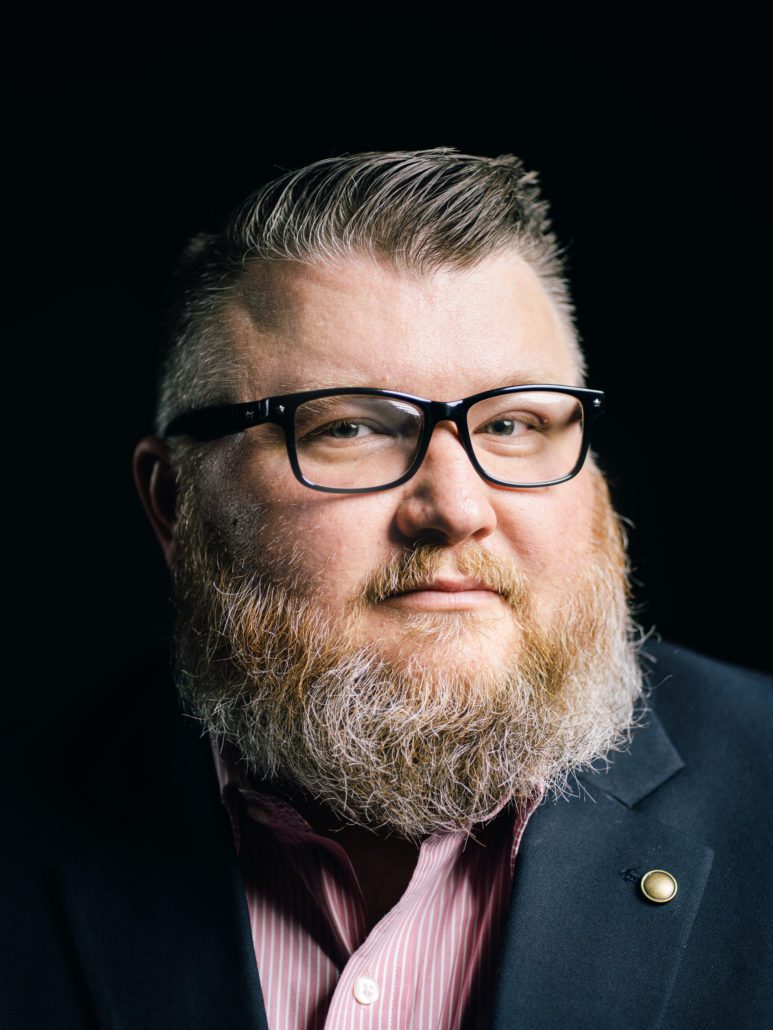
About the Author
Kenny Mason, President, Elite Multimedia
Kenny Mason is the President of Elite Multimedia. He joined the company as an Account Manager and moved up through Director of Production Management and Vice President of Production Management. He brings more than twenty years in the industry. Before Elite he spent two decades on the road and behind the board, designing and producing lighting, broadcast and live event experiences, with credits that include Iron Maiden, Sammy Hagar and Korn.
Elite Multimedia is a Nashville-based full-service event production company specializing in corporate events, live event production, and lighting design. With experience across hundreds of productions, from Fortune 500 conference stages to touring concert rigs, our lighting team designs for every environment: the room, the camera, and the recap video.